
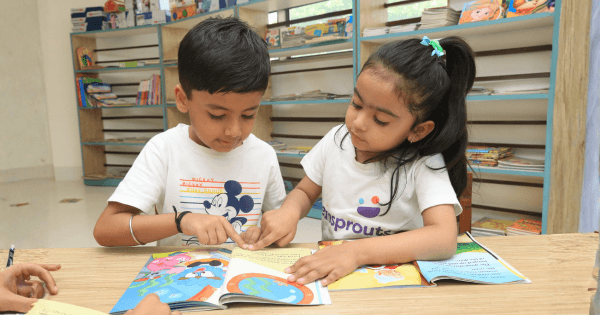
The Role of Storytelling in Early Childhood Development: Why Every Child Needs a Story
Give a three-year-old a toy elephant and, within minutes, you’ll know where it lives, what it likes to do and who its friends are. That little story may seem like play, but it is also a glimpse into how a young mind makes sense of the world. From imaginary adventures to endless questions, children are constantly listening, imagining and narrating. This is why early childhood development is so closely connected to the simple, powerful act of telling and hearing stories.
A Story Is More Than Storytime
For a young child, a story is much more than something to hear before bedtime. It brings together words, emotions, imagination and ideas, helping children connect what they already know with something new. Storytelling gives them a way to explore experiences beyond their immediate world.
As children follow a story, they imagine characters and places, notice emotions, remember events and anticipate what might happen next. Learning becomes something they experience rather than simply something they are told.
Where Imagination Meets Learning
Every story asks children to make connections. Who is the character? What happened? Why did it happen? What could happen next? This natural process supports cognitive development by encouraging children to remember, predict, reason and make sense of events.
Stories also introduce ideas such as sequence and cause and effect. As children begin recognising these patterns, they develop thinking skills that extend beyond storytime into everyday problem-solving and classroom learning.
When Words Become Worlds
Children learn language best when they hear it being used meaningfully. Stories provide a rich context for discovering new words, expressions and sentence structures, making them an important part of language development.
A story might introduce words such as curious, enormous, puzzled or delighted. Children hear these words in context, understand how they are used and gradually begin incorporating them into their own conversations.
Over time, listening to stories can also encourage children to become storytellers themselves, giving them opportunities to describe experiences, express ideas and experiment with language.
The Little Pause That Builds Big Thinking
Storytime also helps children practise something increasingly important: attention. Following a narrative requires children to listen, remember and stay engaged as events unfold, making storytelling a valuable part of child development.
Parents can make storytime interactive by asking questions such as, “What do you think will happen next?” or “Why do you think the character did that?” These simple pauses encourage children to predict, reason and participate rather than simply listen.
Meeting Big Feelings Through Small Characters
Children experience many emotions before they have the words to explain them. Stories can help bridge that gap.
A character might feel nervous about making friends, disappointed after losing a game or proud after trying something difficult. Through storytelling, children can explore these emotions in a safe and relatable way while learning to recognise feelings in themselves and others.
Stories can also show that emotions are rarely simple. A child may discover that they can feel excited and nervous, or sad and hopeful, at the same time.
From Family Stories to Cultural Stories
Stories also create a sense of belonging. Family anecdotes, traditional tales and stories from different cultures introduce children to values such as kindness, courage, fairness and responsibility.
A grandparent’s childhood story can connect a child to their family history, while a folktale from another part of India can open a window into a different way of life. In this way, child development extends beyond individual skills to include identity, connection and an understanding of the world.
Not Every Story Needs a Book
Books are wonderful, but storytelling can happen anywhere. Parents can invent an adventure during a car ride, tell children about their own childhood or create a story around a favourite toy.
And then comes the wonderful turning point: children begin creating stories of their own. A drawing becomes a castle, a cardboard box becomes a spaceship, and a teddy bear suddenly has a surprisingly complicated life.
This child-led storytelling brings together imagination, vocabulary, memory and problem-solving, supporting cognitive development through play and self-expression.
Bringing Stories Into the Classroom
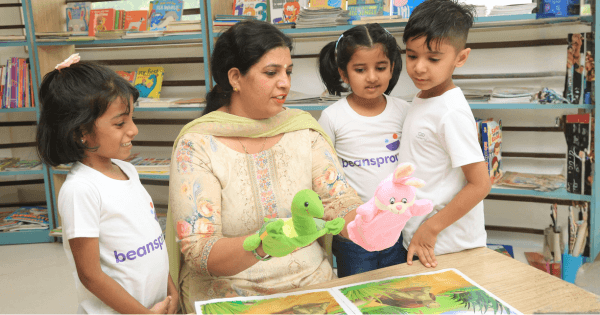
In a thoughtful early learning environment, stories can become part of the entire learning experience. A story can introduce a new theme, inspire artwork, spark conversation or lead into imaginative play.
As educators, we see storytelling not as a break from learning, but as a way to connect different kinds of learning. Language, imagination, social understanding and thinking can all come together around a story.
Making Storytime Meaningful at Home
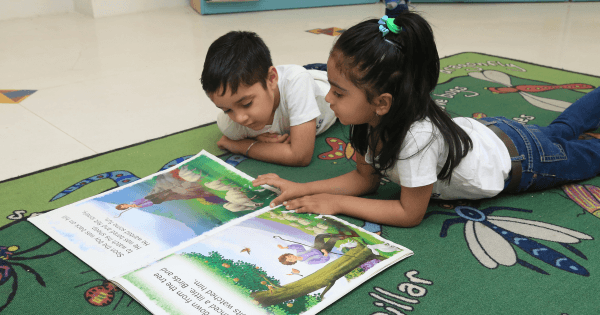
Parents do not need elaborate props or a perfect reading voice. What matters most is being present and involved.
- Read together, just for fun
- Ask open-ended questions and wait for the answer
- Let children interrupt with their thoughts
- Tell family stories and share memories from your childhood
- Let them invent characters, adventures and endings
- Connect stories to everyday experiences
- Explore stories from different cultures to broaden their perspective
These small moments can make a lasting difference to a child’s confidence, curiosity and language development.
Every Child Has a Story to Tell
A story can begin with a book, a question, a toy or something that happened five minutes ago. What matters is where it takes the child.
At Beansprouts, a preschool in Gurugram, we believe the early years should give children plenty of opportunities to listen, imagine, question and create. At school, our little Beanies also understand their feelings and make sense of the world around them through storytelling.